In this Blog Post:
AI in Disaster Management: Transforming Emergency Response and Relief
Did you know that the frequency of natural disasters has increased nearly fivefold in the last 50 years? As these events become more common, the role of AI in disaster management emerges as a transformative solution. This article will explore how AI is revolutionizing disaster prediction, response, and recovery.
Introduction to Current Challenges and AI’s Potential Role
Disaster management faces numerous challenges, including timely response and effective resource allocation.
AI has the potential to enhance these processes by providing accurate predictions and efficient solutions. By analyzing vast amounts of data swiftly, AI can significantly improve decision-making during emergencies.
AI offers innovative solutions to longstanding disaster management challenges.
How AI Technologies Predict Natural Disasters
AI technologies are at the forefront of predicting natural disasters. They use machine learning algorithms to analyze patterns in weather data, seismic activity, and other environmental factors. For instance, AI-driven early warning systems can detect earthquakes and tsunamis with remarkable accuracy, giving communities precious time to evacuate.
What role does real-time data play in disaster mitigation?
Real-time data analysis tools allow authorities to monitor evolving situations and adapt their response strategies effectively. AI systems can process satellite imagery and social media feeds to provide up-to-the-minute information on disaster impacts.
How does AI improve flood prediction?
AI models can predict flood occurrences by analyzing climate data, river levels, and rainfall patterns. These predictions help in planning and implementing mitigation strategies to minimize damage.
AI technologies enhance the accuracy and timeliness of disaster predictions.
Case Studies of Successful AI Implementations
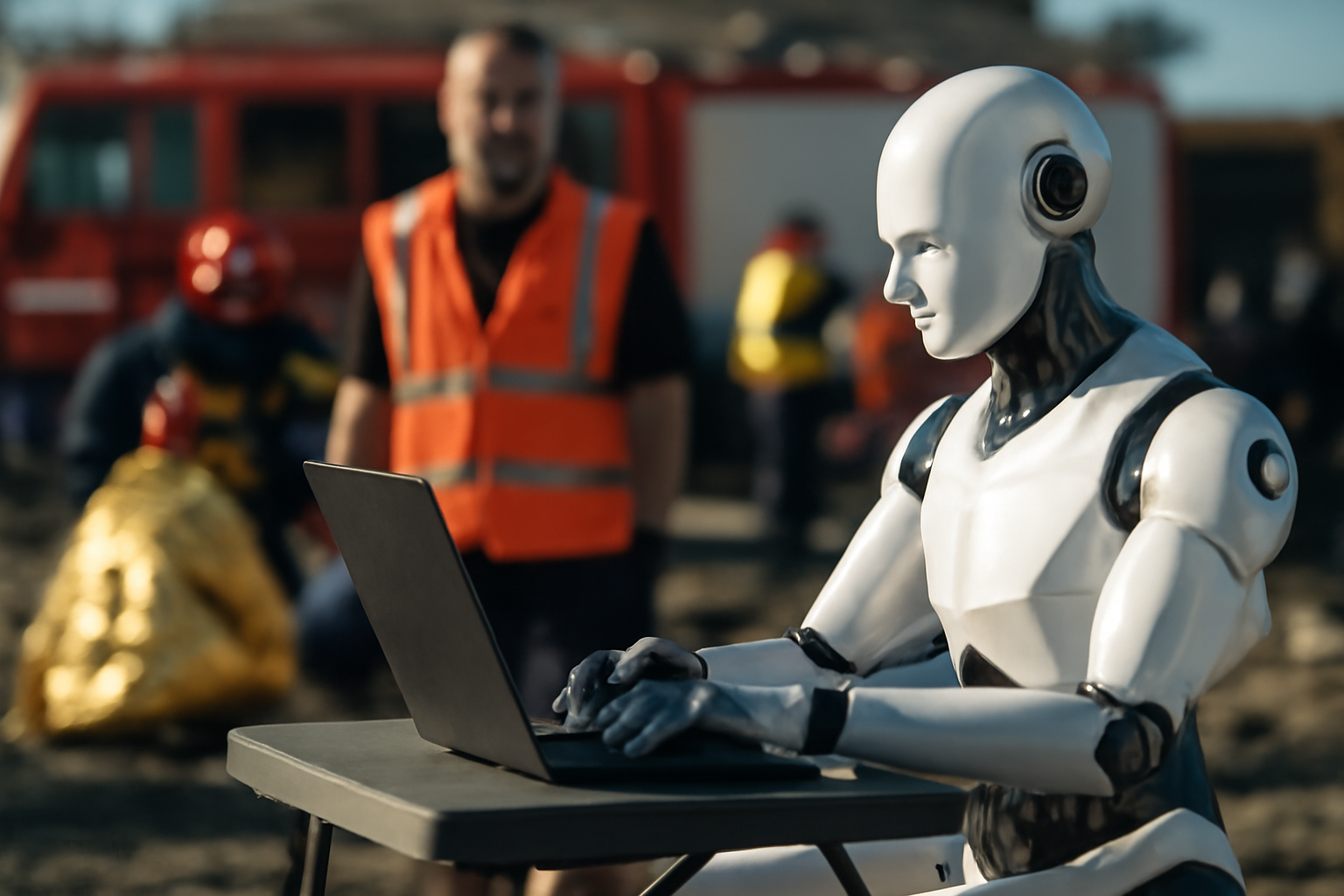
Several case studies demonstrate the effectiveness of AI in disaster response and relief. For example, during the 2020 Australian bushfires, AI algorithms helped predict fire paths and optimized the deployment of firefighting resources, saving lives and property. Similarly, IBM’s Watson was used to analyze vast datasets to support disaster management in Puerto Rico after Hurricane Maria.
How did AI contribute during the COVID-19 pandemic?
AI played a crucial role in managing the COVID-19 pandemic by predicting outbreak patterns, assisting in resource allocation, and helping track infection rates globally.
Can AI help with earthquake response?
AI-driven systems like ShakeAlert provide early warnings for earthquakes, giving individuals and authorities critical seconds to prepare and take action.
These case studies highlight AI’s ability to save lives and optimize resource utilization in disasters.
Ethical Implications and Challenges of AI in Emergency Management
While AI offers enormous potential, it also presents ethical challenges. The use of AI in disaster management raises concerns about data privacy, algorithmic bias, and the potential for over-reliance on technology. Addressing these issues is crucial for ensuring that AI-assisted disaster management is both effective and equitable.
Ethical considerations are vital to the responsible use of AI in disaster scenarios.
Future Prospects: AI Innovations in Disaster Management
The future of AI in disaster management looks promising. As AI technologies continue to evolve, they could further revolutionize how we predict, respond to, and recover from disasters. Innovations such as AI-powered drones for search and rescue operations and improved predictive models for climate-related disasters are on the horizon.
- Advancements in AI algorithms for more precise predictions.
- Integration of AI with Internet of Things (IoT) devices for real-time monitoring.
- Development of AI systems for automatic resource allocation and logistics.
Continued AI innovation holds the key to more effective disaster management strategies.
In conclusion, AI’s role in transforming disaster management is undeniable. From improving predictions to streamlining responses, AI offers solutions to many of the challenges faced in emergency management. We urge readers to advocate for AI integration in local disaster management plans and stay informed about technological advancements. Techtography has been covering technology’s impact on society since 2015, ensuring you stay up-to-date with the latest developments.