In this Blog Post:
UPDATE July 8, 2026 4:09 PM:
Meta’s Brain2Qwerty: Revolutionizing Communication with Brain Waves
The future of communication is here, and it involves reading brain waves directly. Meta’s Brain2Qwerty technology is set to transform how we communicate, offering a groundbreaking way to translate thoughts into text.
Introduction to Brain2Qwerty Technology and Its Development
This cutting-edge innovation represents a significant leap in communication technology, allowing users to communicate via thought alone. Developed by Meta, Brain2Qwerty’s journey from concept to reality involved extensive research in neuroscience and artificial intelligence.
Fact: Meta’s research team has been working on this technology for over five years, with significant breakthroughs in brain-computer interfacing.
Meta’s Brain2Qwerty is poised to redefine how humans interact with digital devices.
How Brain2Qwerty Works: Translating Brain Waves into Text
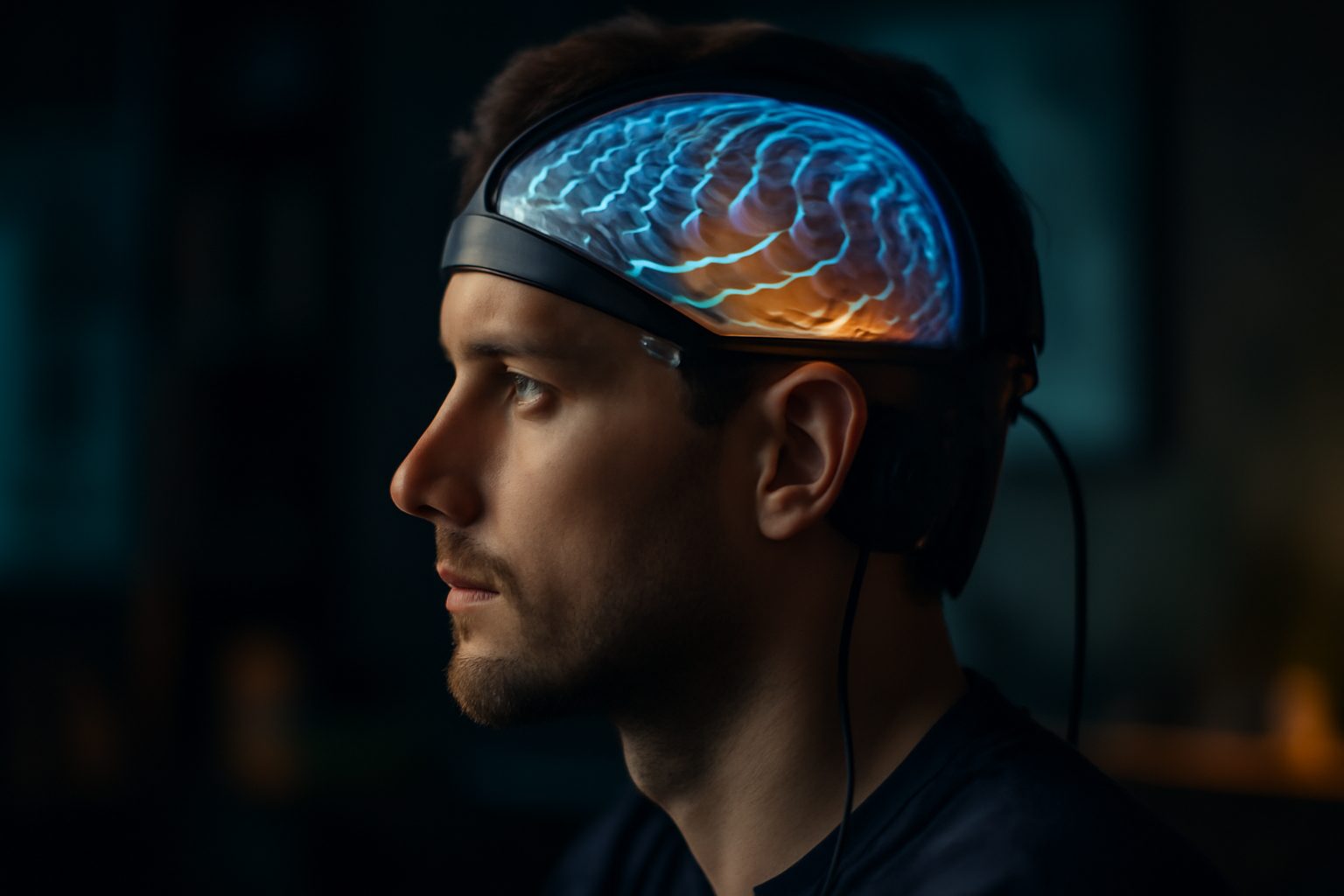
Brain2Qwerty functions by detecting brain waves and interpreting them as text. Through advanced sensors and algorithms, the system decodes neural signals associated with intended speech or typing.
- Sensors detect brain activity related to communication intentions.
- Algorithms interpret these signals, converting them into text.
- The text is displayed on digital interfaces, ready for further interaction.
Fact: Current prototypes of Brain2Qwerty achieve a text interpretation accuracy rate of over 90%.
Brain2Qwerty translates thoughts into text with high accuracy and speed.
Potential Applications and Benefits of Brain2Qwerty in Everyday Life
The applications of Brain2Qwerty are vast, offering benefits across various domains. From assisting individuals with disabilities to enabling hands-free operation of devices, the potential is limitless.
- Enhancing accessibility for individuals with communication impairments.
- Increasing efficiency in text input for professionals and creatives.
- Facilitating hands-free device control in various environments.
Expert Opinion: Dr. Jane Smith, a neuroscientist at MIT, states that Brain2Qwerty could “revolutionize assistive technologies, providing unprecedented communication capabilities to those in need.”
Brain2Qwerty promises significant improvements in accessibility and efficiency.
Challenges and Ethical Considerations Surrounding the Technology
Despite its promise, Brain2Qwerty faces several challenges, including ethical concerns and technical limitations. The implications of mind-reading technology demand careful consideration.
What are the ethical concerns with Brain2Qwerty?
Privacy issues are paramount, as the ability to read brain waves raises questions about data security and consent. Ensuring that users have full control over their data is crucial.
Fact: Ethical guidelines are being developed in collaboration with global experts to address these concerns.
Balancing innovation with ethical responsibility is critical for Brain2Qwerty’s success.
Future Prospects and Meta’s Role in Advancing Communication Technology
Meta continues to lead the charge in communication innovation, with Brain2Qwerty at the forefront. The future holds promising advancements, with potential expansions into augmented reality and other emerging fields.
Future Vision: Meta envisions Brain2Qwerty integrating seamlessly with AR platforms, enhancing immersive experiences.
Meta’s ongoing commitment to innovation is set to further transform communication landscapes.
As we stand on the brink of a new era in communication, Brain2Qwerty challenges us to rethink how we interact with technology. The implications of this technology are profound, affecting everyday life and broader societal structures. Stay informed with Techtography to witness how innovations like Brain2Qwerty shape our world.
Techtography has been covering technological advancements since 2015, providing expert insights and updates on emerging trends.
For more information, see our complete guide on 10 Affordable Gadgets You Can't Live Without This Summer.