In this Blog Post:
Creating a more sustainable home no longer has to mean making drastic lifestyle changes or spending heavily on major upgrades. For many people, the goal is much simpler. They want practical ways to reduce waste, lower utility use, and make smarter everyday choices without adding stress to their routine. That is exactly where smart sustainable home tech comes in.
This growing category includes devices and appliances designed to help households live more efficiently. Some reduce food waste. Others help cut back on electricity or water use. Some improve air quality or give homeowners better visibility into how their homes are functioning day to day. The most useful products are not just trendy gadgets with green marketing. They solve real problems in ways that are easy to understand and easy to maintain.
As more people look for practical tools to support a more mindful way of living, smart sustainable home tech is becoming one of the most interesting parts of the modern home. In this guide, we will look at what it means, why it matters, which types of gadgets are worth paying attention to, and how to choose devices that actually make sense for your home.
What Is Smart Sustainable Home Tech?
Smart sustainable home tech refers to household devices, appliances, and connected tools that help reduce waste, improve efficiency, and support more responsible use of resources. These products often combine convenience with a practical environmental benefit.
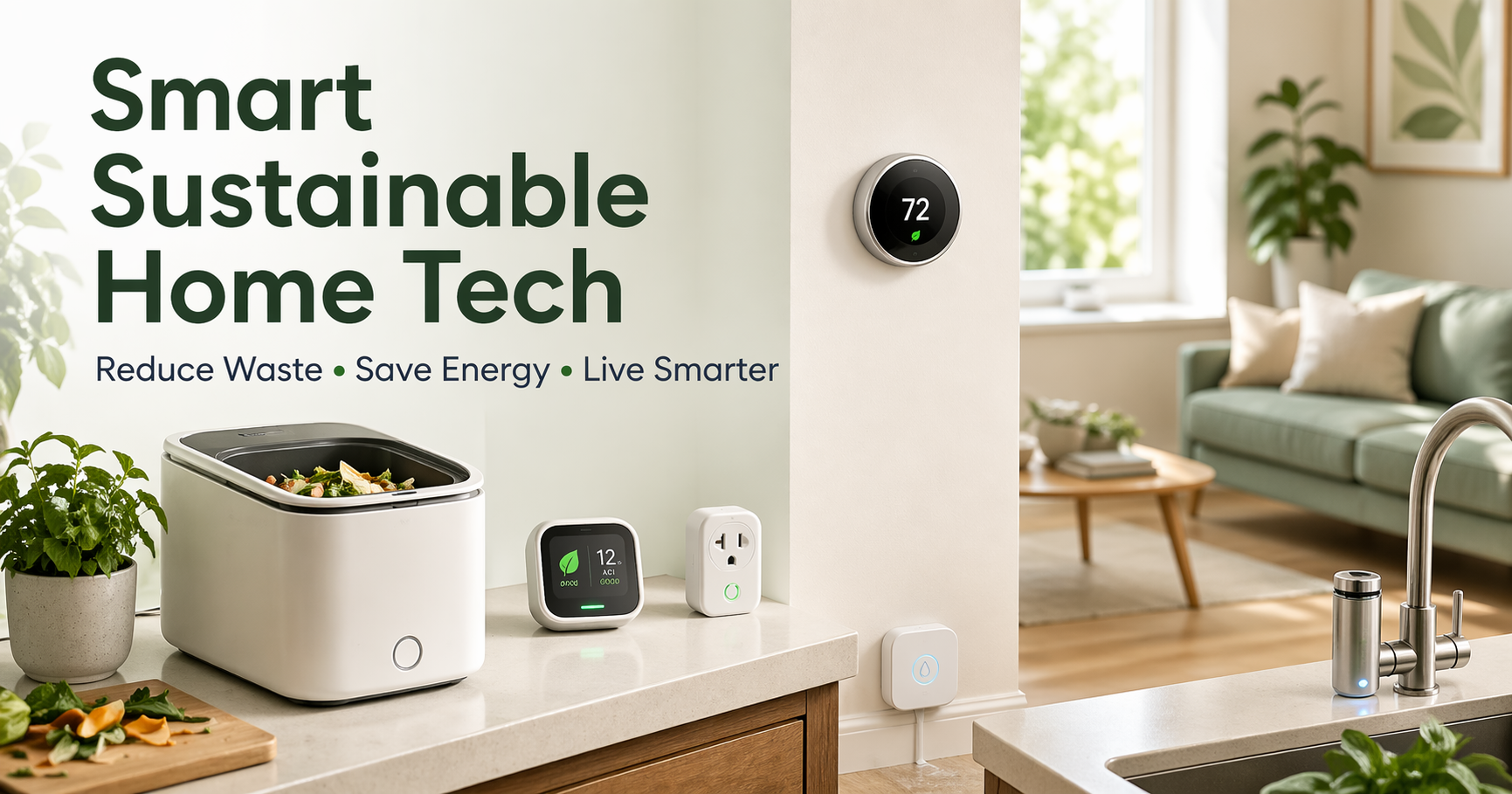
Some examples are easy to imagine. A smart thermostat can help reduce unnecessary heating and cooling. An electric kitchen composter or food recycler can reduce the amount of food scraps going into the trash. A leak detector can alert you before a small problem turns into major water waste. An energy monitoring plug can show which appliances are quietly driving up your power bill.
The idea is not to turn every home into a futuristic smart house. The real value is in using technology to make better everyday decisions with less effort. In many cases, sustainable home tech works best when it quietly fits into your normal habits instead of forcing you to adopt a completely new lifestyle.
Why More People Are Looking for Practical Eco-Friendly Gadgets
Interest in sustainable living has grown, but many households are still looking for realistic ways to apply it. People want options that feel practical, not overwhelming. That shift is one reason this category continues to attract attention.
Rising electricity, water, and household costs have also made efficiency more important. Many people are no longer buying home gadgets just because they are new or smart. They want products that help solve specific problems. That could mean reducing food waste in the kitchen, keeping indoor air healthier, or identifying where energy is being wasted.
There is also a growing preference for products that do more than one thing well. A good sustainable gadget should ideally improve convenience while also reducing waste or lowering resource use. If a device is too complicated, too noisy, too expensive to maintain, or too limited in its actual benefit, people quickly lose interest.
That is why the strongest products in this space tend to be the ones that connect sustainability to daily life in a simple, visible way.
What Makes a Sustainable Home Gadget Actually Worth Buying?
Not every product marketed as eco-friendly is automatically useful. Some are built more around branding than actual household value. Before buying into the category, it helps to ask a few practical questions.
First, does the product solve a real problem in your home? A gadget is much more worthwhile if it addresses something specific, such as too much food waste, high energy bills, stale indoor air, or hidden water leaks.
Second, does it save time, effort, or money in a noticeable way? Sustainability matters, but convenience still plays a huge role in whether people keep using a product over time. Devices that are difficult to clean, noisy to operate, or expensive to maintain often end up unused.
Third, is the benefit measurable? The best sustainable home gadgets make their value easier to see. Maybe they reduce trash volume, show energy consumption patterns, improve comfort, or help prevent avoidable waste.
Finally, does it fit the reality of your home? Apartment dwellers, renters, and busy families often need products that are compact, simple, and flexible. A technically impressive device is not always the right choice if it does not work with your space, schedule, or budget.
The Best Types of Smart Sustainable Home Tech to Know
Electric Kitchen Composters and Food Recyclers
Electric kitchen composters have become one of the most talked-about products in this category. These devices are designed to reduce food waste quickly and with less odor than traditional composting. For people who live in apartments, have limited outdoor space, or simply do not want to manage a backyard compost pile, they can be an appealing option.
It is important, however, to understand what many of these machines actually do. A number of so-called composters are closer to food recyclers. They often dry, grind, and reduce food scraps rather than producing fully finished, garden-ready compost on their own. That does not make them useless. In the right household, reducing the mess, smell, and bulk of food waste can still be a major benefit.
This is a strong subcategory for content because it combines buyer intent, practicality, and a growing interest in sustainability. It is also a category where honest explanations matter, since many buyers do not realize there is a difference between waste reduction and true composting.
Smart Thermostats
Smart thermostats remain one of the most recognizable forms of sustainable home tech. Their main appeal is simple. They help households manage heating and cooling more efficiently, which can improve comfort while reducing unnecessary energy use.
Features like scheduling, learning routines, occupancy detection, and app controls can make a real difference in homes where climate control is one of the largest parts of the utility bill. For homeowners especially, this is one of the clearest examples of technology being used to reduce waste in a practical, low-friction way.
Indoor Air Quality Monitors
Indoor air quality is easy to overlook because it is not always visible. But air quality monitors help make the invisible easier to understand. These devices can track factors like particulate matter, carbon dioxide, humidity, and other conditions that affect comfort and health.
They are especially useful in homes where ventilation is poor, allergies are a concern, or air pollution becomes an issue during certain seasons. While they do not fix air quality by themselves, they help households respond more intelligently by knowing when to ventilate, filter, or adjust the indoor environment.
Water-Saving Devices and Leak Detectors
Water efficiency is another area where smart home tech can be practical without being flashy. Some products, such as efficient shower heads or faucet attachments, reduce water usage in a straightforward way. Others, like smart leak detectors, help prevent waste by alerting homeowners to hidden problems before they become expensive.
In many homes, unnoticed leaks are one of the easiest ways water and money get lost over time. A compact sensor that warns you early may not feel exciting, but it can be one of the most useful devices in the house.
Energy Monitoring Plugs and Home Energy Trackers
Many households want to save energy but do not know where to start. Energy monitoring devices help by showing how much electricity certain appliances or devices actually use. That visibility can be surprisingly powerful.
Instead of guessing which items are draining power, users can make more informed decisions about what to unplug, replace, or use differently. For people trying to create a more efficient home, this type of tech can turn abstract concerns about energy waste into something much more actionable.
Who Benefits Most From Sustainable Home Tech?
One of the strengths of this category is that it is not limited to a single type of household. Different products serve different needs, but several groups are especially likely to benefit.
Apartment dwellers often need compact tools that reduce waste without requiring outdoor space or permanent installation. Busy families may value products that save time while helping control food waste, water use, or energy consumption. Homeowners with rising utility bills may be looking for smarter ways to understand what is driving their costs. Renters may prefer flexible, non-invasive gadgets that can move with them.
There is also a growing group of buyers who simply want to make more intentional purchases. They are less interested in collecting random gadgets and more interested in owning fewer things that do more meaningful work.
The Biggest Mistakes People Make When Buying Eco-Friendly Gadgets
A common mistake is buying based on trend appeal rather than actual need. Just because a product is popular does not mean it solves the right problem for your home.
Another mistake is assuming every green gadget will save money. Some products are more about convenience and waste reduction than direct financial savings. That can still be worthwhile, but expectations should be realistic.
Maintenance is another factor many buyers underestimate. Filters, replacement parts, subscriptions, cleaning requirements, and noise levels can all shape the long-term experience. The best product on paper may not be the best fit in real life.
People also sometimes expect one purchase to dramatically transform their environmental impact. In reality, sustainable living often works better as a series of practical improvements rather than one big solution.
How to Build a Smarter, More Sustainable Home Without Overspending
The best place to start is with a single problem. If food waste is your biggest frustration, look into a kitchen waste reduction solution. If your energy bill keeps climbing, consider a smart thermostat or energy monitor. If you suspect hidden water waste, start with leak detection.
This approach is usually more sustainable in every sense. It keeps spending focused, avoids unnecessary purchases, and helps ensure each product earns its place in your home. A more efficient home does not need to be built all at once. It can grow one smart decision at a time.
It also helps to think beyond labels like green, eco, or smart. What matters most is whether the device makes daily life better while reducing waste or improving efficiency in a meaningful way.
The Future of Sustainable Home Tech
The future of this category will likely be shaped less by novelty and more by usefulness. The products that last are the ones that help people reduce waste, track household patterns, and make better decisions without becoming complicated or intrusive.
That means the next wave of sustainable home tech may not always look dramatic. In many cases, the best innovations will be the ones that work quietly in the background, helping households waste less, spend more wisely, and live more intentionally.
Final Thoughts
A more sustainable home does not always begin with solar panels, a renovation, or a complete lifestyle overhaul. Sometimes it starts with one practical device that solves a real problem and makes everyday life a little easier.
That is the real appeal of smart sustainable home tech. At its best, it brings together convenience, efficiency, and responsibility in a way that feels realistic for modern households. The goal is not perfection. The goal is progress that fits into real life.
As this category continues to grow, the smartest approach is to stay focused on usefulness. Choose products that match your needs, understand what they actually do, and build from there. A smarter home can also be a more sustainable one, especially when technology is used with intention.