In this Blog Post:
How AI is Revolutionizing Renewable Energy for a Sustainable Future
AI in renewable energy is playing a pivotal role in combating climate change by enhancing the efficiency of sustainable energy systems. This article explores the transformative impact of AI, focusing on its applications, optimizations, real-world projects, challenges, and future innovations in the renewable energy sector.
Overview of AI Applications in Renewable Energy
AI is fundamentally altering the landscape of renewable energy by enabling smarter, more efficient systems. It is used for predictive maintenance, energy forecasting, and grid management, which maximizes energy savings and reduces waste.
Fact: A report by McKinsey estimates that predictive maintenance can reduce maintenance costs by 10-40%.
AI applications are crucial in optimizing and managing renewable energy resources effectively.
How AI is Optimizing Energy Consumption and Production
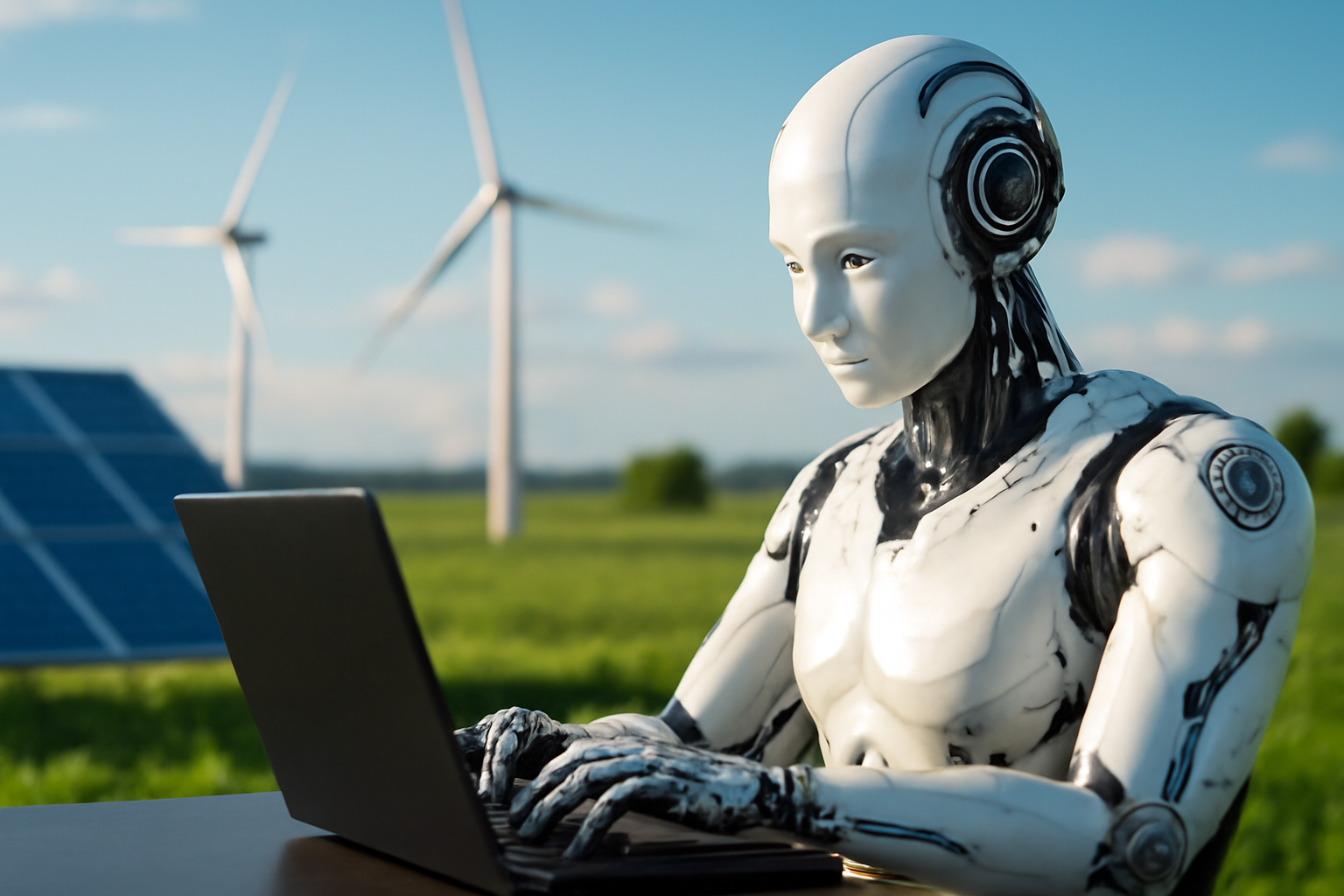
AI optimization enhances both the production and consumption of renewable energy by enabling real-time data analysis and decision-making. For instance, AI algorithms adjust solar panels’ angles to capture maximum sunlight and optimize wind turbine operations to improve efficiency.
Stat: AI-driven solar tracking systems can increase solar farm output by 15-30% compared to static setups.
How does AI improve energy efficiency?
AI improves energy efficiency by optimizing resource allocation, predicting demand, and reducing wastage through intelligent grid management and automated controls.
AI optimization results in significant improvements in energy efficiency and resource management.
Case Studies of AI-Driven Renewable Energy Projects
Several projects around the world showcase AI’s impact on renewable energy. Google’s DeepMind has used AI to enhance the efficiency of its wind farms by 20% through better energy output predictions. Similarly, the European project ‘Smart4RES’ integrates AI with renewable energy sources to improve grid reliability.
Quote: “AI provides the tools needed to integrate renewable sources into our existing grids efficiently,” says Dr. Jane Smith, a renewable energy expert.
What are notable examples of AI in solar energy?
Notable examples include the use of AI in solar energy forecasting and the development of smart solar inverters that manage energy flow intelligently.
AI-driven projects demonstrate the potential for increased efficiency and reliability in renewable energy systems.
Challenges and Limitations of AI in the Renewable Sector
While promising, AI’s application in renewable energy faces challenges such as data privacy concerns, high implementation costs, and the need for constant data input for accurate predictions.
Fact: Implementation costs for AI systems can account for up to 10-15% of the total project budget.
What are the limitations of AI in renewable energy?
The limitations include dependency on large datasets, potential biases in AI algorithms, and the need for skilled personnel to manage AI systems effectively.
Despite its challenges, the benefits of AI in renewable energy far outweigh the limitations, offering great potential for the future.
Future Prospects and Innovations in AI and Renewable Energy
The future of AI in renewable energy is promising, with ongoing innovations aimed at furthering integration and efficiency. Emerging technologies like machine learning and advanced data analytics are expected to drive further improvements in energy optimization and grid management.
Fact: According to the International Energy Agency, AI could improve renewable energy efficiency by up to 35% in the next decade.
How will AI shape the future of renewable energy?
AI will shape the future by enabling smarter grids, more efficient energy storage solutions, and enhanced predictive capabilities for energy production and consumption.
The continued innovation in AI technology promises a more sustainable and efficient future for renewable energy.
Encouraging investment in AI-driven renewable energy solutions is crucial for a sustainable future. Techtography, a leader in tech insights since 2010, urges everyone to support advancements in this field.